South Florida Coastal Resilience
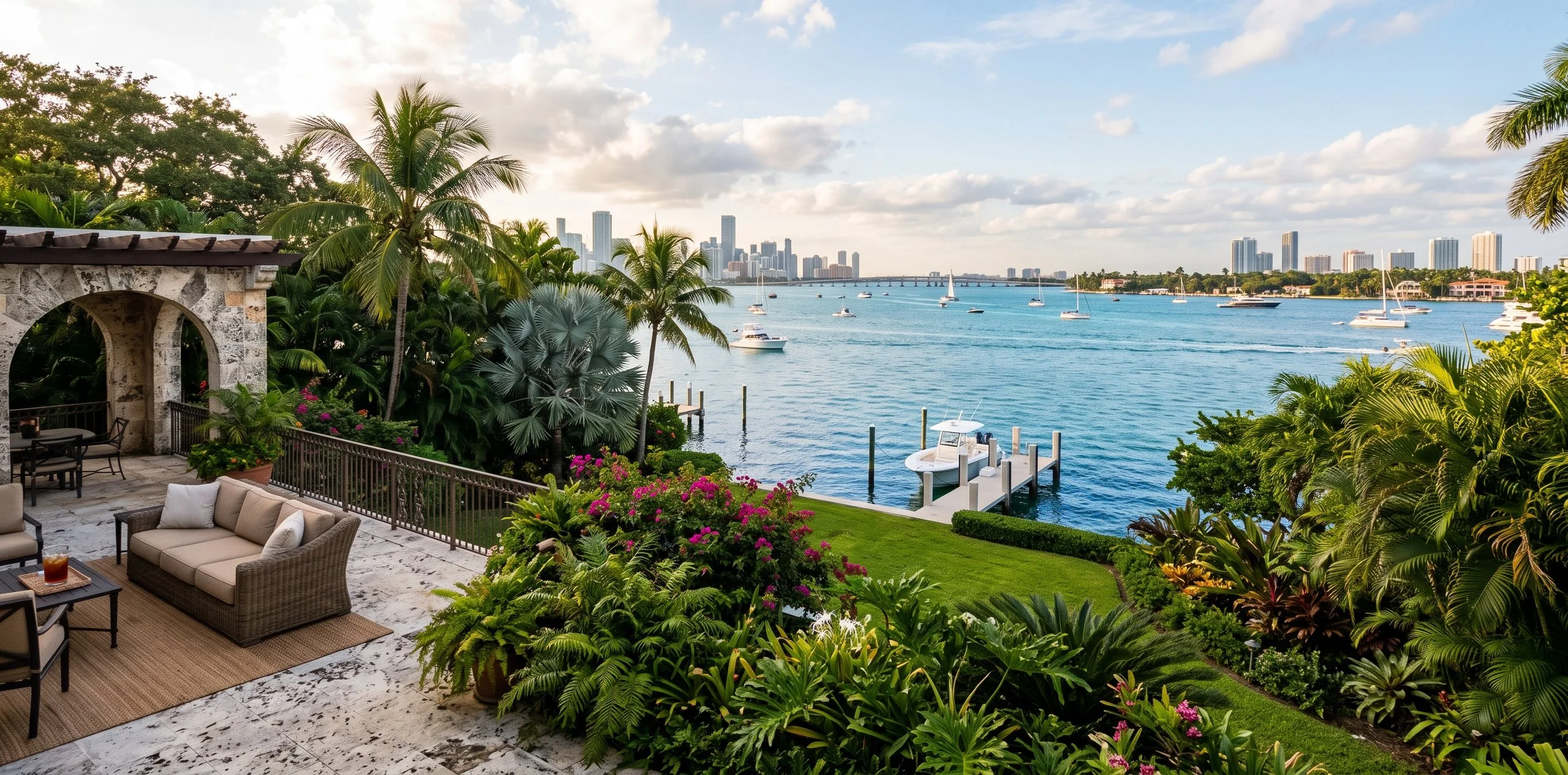
Do you own a waterfront property in Miami? Have you ever dealt with flooding issues on your land? Flooding on coastal properties comes from 3 main sources:
Tidal Inundation
The Problem: During high tide events sea water spills inland, submerging coastal lands. Miami has two high tides a day, and the King Tides of September, October, and November are even higher.
The Solution: Ensure your critical buildings are elevated well above the recommended Base Flood Elevation. Raise the elevation of your landscape as well.Storm Surge
The Problem: Coastal storms “push” water inland, raising sea levels above typical tidal conditions.
The Solution: Fortify your shoreline with living shorelines, sea walls, and hybrid-design solutions.Stormwater
The Problem: Rainwater collects and pools in low-lying parts of your property. A high-water table limits infiltration to groundwater below.
The Solution: Regrade your property so water flows in the right direction. Add more pervious surfaces and green infrastructure techniques to absorb and redistribute water.
Moreover, these events can occur simultaneously. Consider a hurricane: rainwater soaks the land, winds push storm surges inland, and if this occurs at a high tide, the base water level is at its peak. All of these can have devastating effects on not just your landscape design, but your home and your property value. A well-designed coastal landscape minimizes these effects, allowing you to enjoy living on the water with peace of mind.
If you have a coastal property and are looking for beautiful, elegant solutions to protect your coastal assets, contact Dimension Design Landscape Architecture.
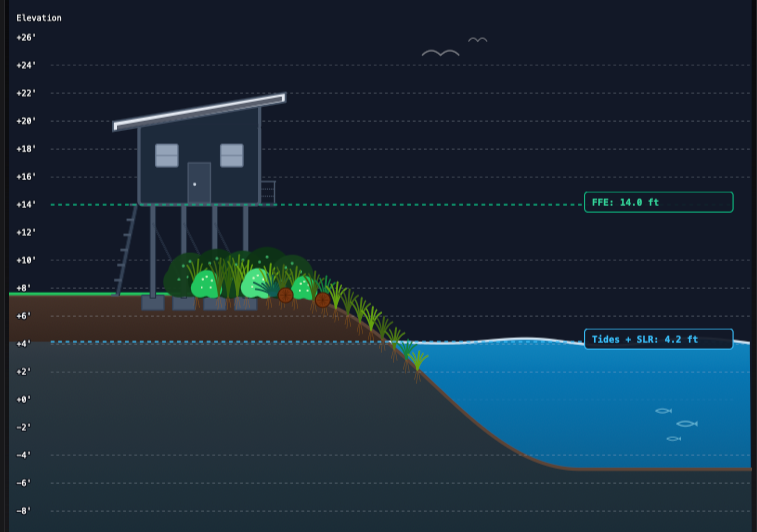
Also, please use this web app to visualize how these three forces affect your land. Set elevations for your building and landscape, then set elevations for tides and storm surge. Play around with different coastal conditions. Use this to plan your next coastal project.
